
https://www.wonlow.com/the-ultimate-guide-to-inline-skating-for-beginners-and-kids/
Braking: Mastering the Art of Stopping
One of the biggest fears for beginners is not being able to stop. Inline skates are usually equipped with heel brakes, which are the safest and easiest way to slow down.
Heel braking method : Slightly lift the toes of your front foot, gently press the brake pad with your heel on the ground, and slowly slow down.
Don’t rush to press hard at the beginning, otherwise you will easily fall down. Practice slowly and gradually find the strength and angle.
A quick tip: Many novice riders, upon seeing an obstacle ahead, immediately react by pedaling hard, which only causes them to slide even faster. Don’t rush; braking is the key.
Cornering: Small tricks, big impact
Beginners tend to fall when turning, but the key lies in the body’s center of gravity and footwork:
Bend your knees slightly and lean forward slightly.
Lightly press the wheel with your inside foot and use your outside foot for balance.
Look in the direction your eyes go and your body will follow naturally.
Remember, don’t twist your upper body to turn, as this can easily cause you to lose balance. When you’re just starting out, practice small arcs at a slow speed, then increase your speed once you get the hang of it.
Posture: Stability is key
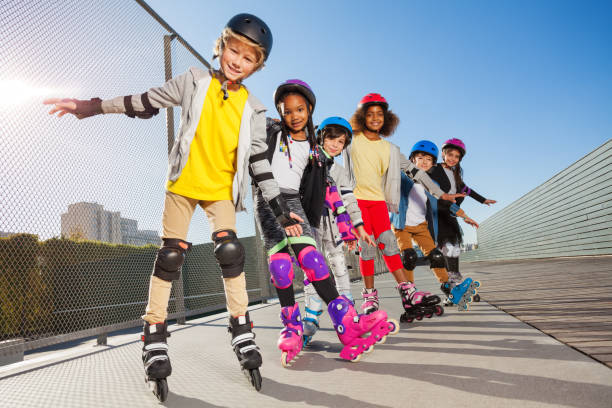
Sliding stability directly determines whether children dare to play and practice. Posture suggestions for beginners:
Place your feet in a slight V shape, with your front foot pointed outward and your back foot slightly turned inward.
Bend your knees slightly, lower your center of gravity, and lean forward slightly.
Let your arms swing naturally to help with balance.
A quick complaint: Don’t think inline skates are like regular shoes; unstable footing and erratic gliding are common. Form is more important than speed.
Balance Exercise: From Standing Still to Sliding
Practice on the spot : First, let your child put on shoes and stand firmly on the grass or carpet and take a few steps.
Small glide : Glide slowly for a few meters to practice shifting your center of gravity.
Braking practice : Practice heel braking more often on flat ground to develop muscle memory.
Don’t rush each step. Practice repeatedly and your child’s sense of balance and confidence will gradually improve.
Tips for Parents
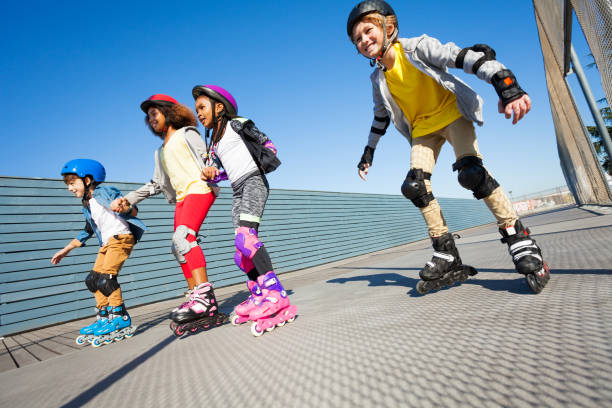
In the initial stage of learning, parents can stand by and hold the child’s hand or extend their hands to protect the child, which will increase the child’s sense of security.
Choose a loose, flat practice area, avoiding slippery, gravelly or sloped areas.
Encourage your child, give them lots of praise, and don’t constantly correct them. Self-confidence is more important than accurate movement.
Summarize
The key to beginner inline skates is braking, turning, and posture :
Brake to ensure safety and learn to stop slowly;
Turning relies on the center of gravity and footwork, and slow practice is used to develop skills;
the posture is stable, gliding will be natural and smooth.
Don’t rush things; steady and measured progress is the key to a happy skate. Practice with your child, laugh when they fall, and they’ll eventually be skating like Peter Pan!
https://www.wonlow.com/the-ultimate-guide-to-inline-skating-for-beginners-and-kids/


